We still have Turkeys available for Thanksgiving dinners, along with beats, brussels sprouts and chickens. Stop by the Farm anytime, text, call, or send a message on our socials for more info.
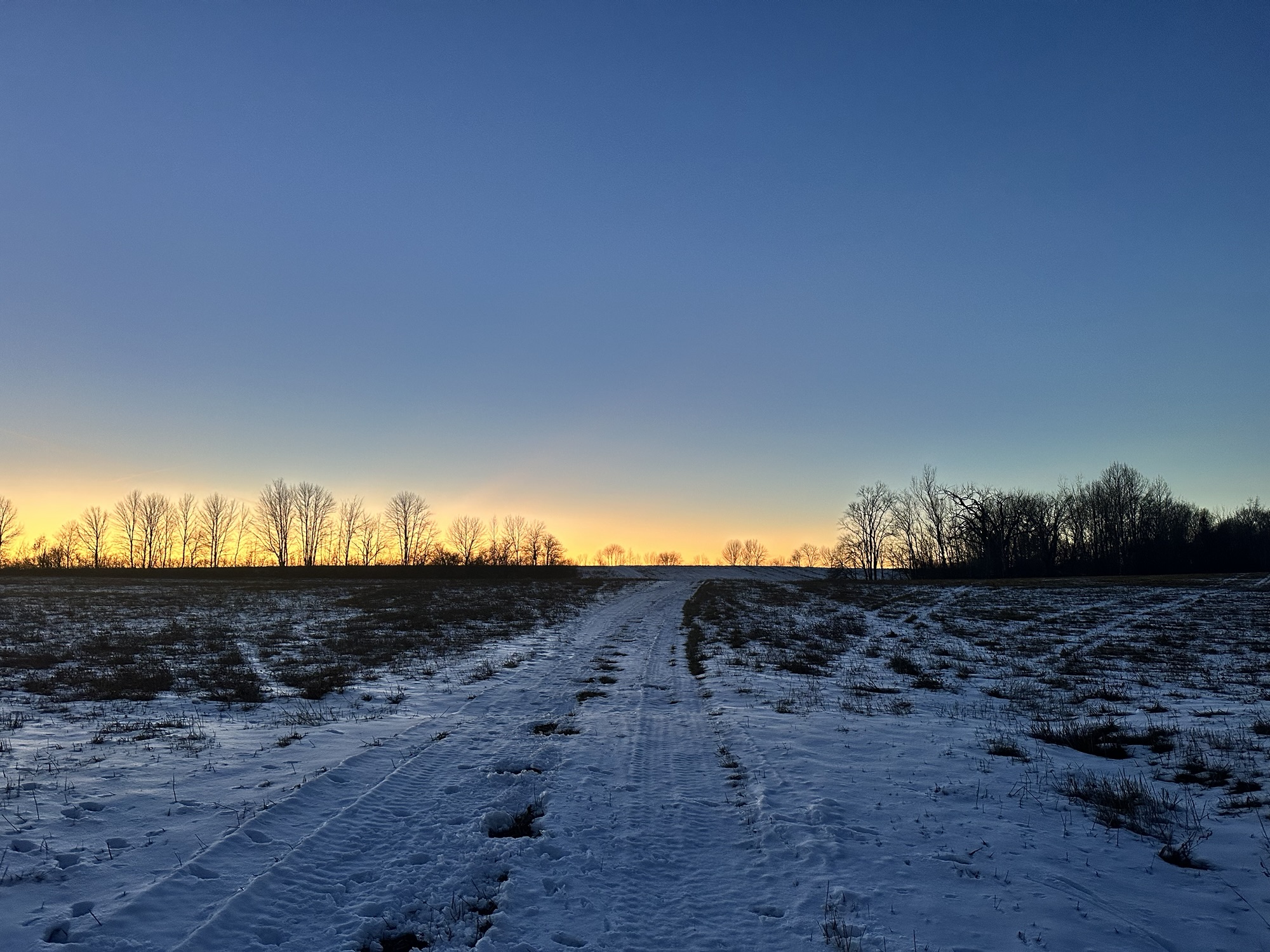
We are a month from the solstice and I can still find tufts of grass and kick at frozen dirt on my way across the yard, but the animals are in the barn each night and as I am writing this it’s been dark for hours. As far as I’m concerned, it’s winter on the Farm.
The Farm runs on routines. After my coffee, I walk to the barn and hit the first light switch. Steel scrapes concrete far down the aisle as Chippy gets his shoes under him and abruptly stands, looking embarrassed that I caught him laying down. His mane and forelock are covered in shavings, a horse’s version of bedhead that leaves no doubt he was out cold. As I travel through the barn Wilbur grunts and stirs in his nest, but doesn’t bother getting up. I hear the shaking of dog tags as Benny and Tuffi’s bleary eyed faces peer out from the main stall gate. They’ve been up all night patrolling fence lines, and are waiting on breakfast before napping in the sun most of the day. Chippy begins to talk, a rumble from deep down, as if clearing his throat to remind me he wants his oats. Jewels and Leroy hang their long faces over their gates, thinking the same but letting Chippy do their talking for them.
I start with the horses. As water spills into their buckets, I appreciate that the hose hasn’t frozen in spite of the 24-degree outside temperature. Soon enough my routine will include hauling buckets 100′ down the barn from the water hydrant. I cut bailing twine, releasing three bales of hay and leafing it into each horse’s hay box, followed by the goats’ feeders. The dogs get there breakfast too, Benny in the aisle and Tuffi in the main stall. If Benny so much as looks at Tuffi while she’s still eating she will attack, so he eats separately for his own protection. Just another routine. As I grab the steel grain scoop I feel its chill through my gloves and dig into the hog feed. The sounds is Wilbur’s que that it’s finally worth getting up. He is scratching his backside on the gate as I pull up on the latch. I dump the scoopful into his trough and rub his back as he noses into his grain.
“Morning Chippy,” “Good girl Jewelsy,” “Oh Leeeeroy,” “Macky and Jacky,” “Hello Ladies,” “Wilby,” I chat it up with everyone as I make my rounds. I pet noses, scratch between horns and give a tail a friendly tug. Eventually I head out the door, forced to confront that I have a day away from the farm awaiting me. A faint orange glow is rising to the east over the back fields, pushing up on the darkness. The snow, ice and dirt crunch under my boots as I head down the driveway, start my work truck and head back into the house to pack my lunch. Liz is coming down the stairs. She has her book and sits in the rocking chair by the woodstove which I stoked on my way out the door. She’ll relax for 30 minutes— it might be the last time she sits today. Shortly after I pull out of the driveway she will head to the barn and start her own morning routine; turning the horses onto pasture,, tending to the laying hens, milking the goats and bringing grain to the pigs that are still out back. She’s off and running.
In the evening, the three of us will convene back in the barn, arriving like bees returning to our hive after a busy day. Ellie’s days are spent at school, and once off the bus she will either decompress in quiet independence behind a book or shadow Liz with a series of questions, request and stories, at times offering her ‘assistance’. Liz does everything for the Farm all day. She is the manager, laborer, accountant, banker, store clerk and many other hats 365 days a year. She only breaks away when its time to lend a hand to our community, which is as much a part of having a small farm as farming. I spend 4-days per week in Baxter Park, supporting the Farm in a more indirect yet necessary way, which is to say providing capital cashflow.
Once the three of us are in the barn and the darkness pushes the orange glow down behind the Mountain to the West, the temperature sinks along with it. The three of us get to work, although its the kind of work that’s not work, at least not in the negative sense most think of it. There is no drudgery with this work.
“But is work something we have a right to escape? And can we escape it with impunity? We are probably the first entire people ever to think so. All the ancient wisdom that has come down to us counsels otherwise. It tells us that work is necessary to us, as much a part of our condition as mortality; that good work is our salvation and our joy; that shoddy or dishonest or self-serving work is our curse and our doom. We have tried to escape the sweat and sorrow promised in Genesis–only to find that, in order to do so, we must forswear love and excellence, health and joy.” Wendell Berry, The Unsettling of America
As Liz cleans a horse stall, Ellie marches into the pasture, calling to the horses and leading them in for their dinner. The goat flock is in and out of their always-open door, banging horns, pushing and sorting out their ever evolving social order which is at peak volatility during fall. It’s breeding season. The bucks are in their own stalls, standing with front feet on gate rails waiting on either grain or a doe in heat. I scoop Wilbur’s dinner into his trough. At the other end of the barn we can hear the chickens sorting out their own order with frequent wing flapping and an occasional squawk as they rise to their roosts and sort out positioning. Us three talk a little as we work, about Ellie’s school day and what she did in art class. About our neighbors. whether Joe stopped for goat milk for his baby sister, or if Menno has gotten his deer. We check in on which of us has done what chore, and who still needs to be fed. I dig a scoop into the goat grain “I’ve already fed the boys” Liz says from over a stall wall. I move on and search for the next task. “The pigs up the hill still need fed; the grains already in the side-by-side.”
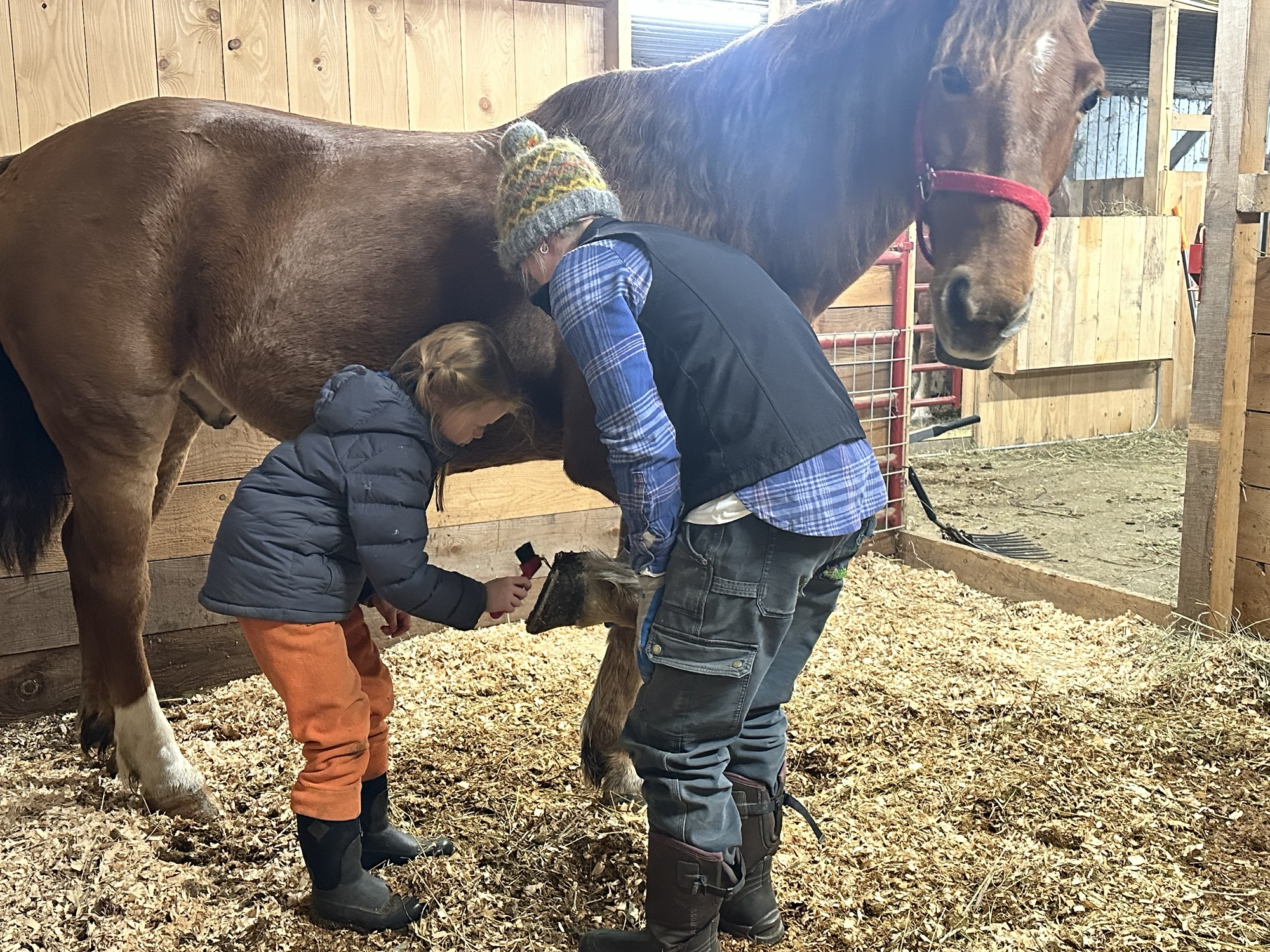
When the necessary chores are done, are activities become more social and discretionary. Liz and Ellie brush Chip, while I visit with Leroy and Jewels. I move on and start leisurely shifting hay from the storage stall, to below the horse feeders in preparation for morning chores. Ellie puts her goat Tiny on a leash and walks her into the aisle. Liz joins them with Chippy, lifting his front hoof and picking mud and ice from its crevices and around his shoe. The task catches Ellie’s eye and she puts Tiny back in the stall and joins her. I move to the other end of the barn, put our chainsaw into the benchtop vice, and start blowing out the frozen woodchips and dirt collected under the clutch cover from cutting the weekend before.
As I begin sharpening the saw, Ellie joins me. Liz has gone to the house to start dinner so Ellie and I begin a lesson on chainsaw sharpening, a skill close to my heart. We talk about the angle of sharpening, and how the file guide helps you find that correct angle. We discuss why the teeth alternate from one side of the chain to the other. I point out the rakers and how they guide the depth of the chains cut. I was almost 30 years old before I knew how a chainsaw was sharpened, and know grown men who will buy a new chain before sharpening a dull one. I tell her maybe one day she will teach her husband how to properly sharpen her saw.
It’s Thursday night. For the next 6 months, this will be every night. The darkness outside, the frequent winds and soon to arrive snow, push us to the confines of the barn, 40′ by 140′. In the barn we are sheltered, and focused. The barn blocks our signals to the outside world. Everything we need is there. We are closer to the animals in the winter. It feels as though they need us—we surely need them. Eventually, Ellie and I turn off the last barn lights, pull down the door and slip down the driveway to the house.